
Avebury
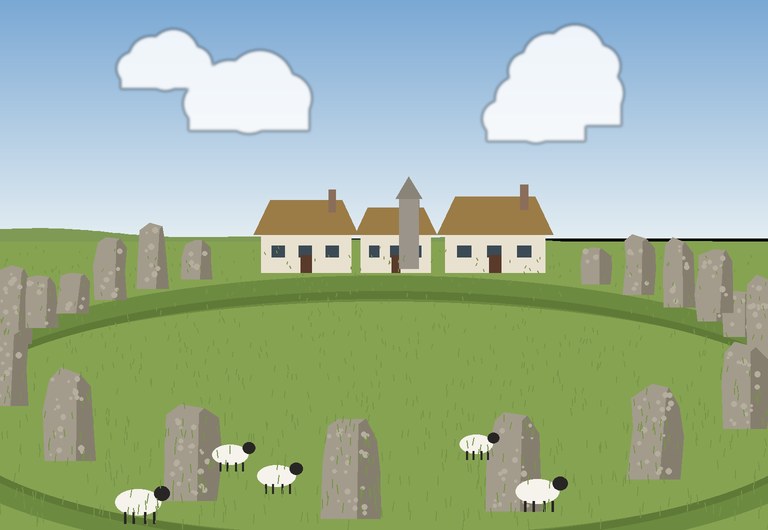
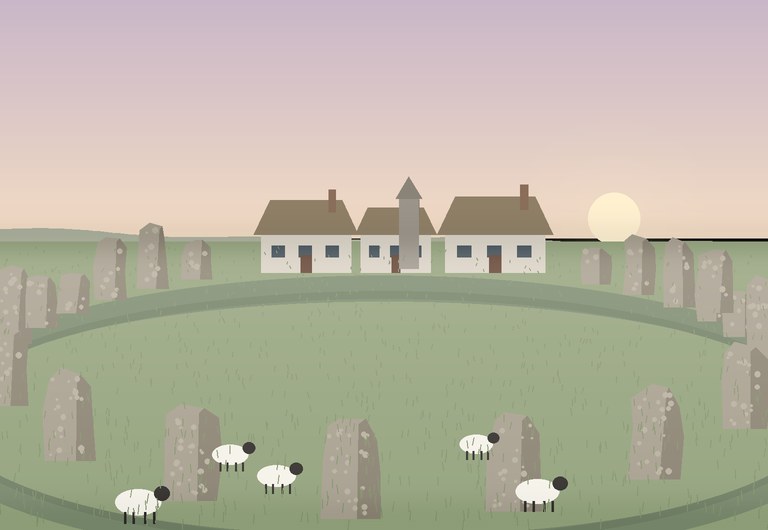
Drag across the picture to compare the two views.
Avebury, about 30 kilometres north of Stonehenge, is the largest stone circle in Britain and one of the largest in Europe. It is so big that a village, with its houses, pub and church, grew up inside it. You can walk right up to the stones and touch them.
A monument on a huge scale
A massive bank and ditch, the henge, surrounds the site. Inside it, the outer stone circle measures about 331 metres across, and it originally held around 98 large sarsen stones, some weighing more than 40 tonnes. Two smaller circles stand inside the big one. The monument was built in stages over several centuries in the third millennium BC.
From the south-east entrance, the West Kennet Avenue of paired stones runs across the fields towards another ancient site called The Sanctuary. Nearby rises Silbury Hill, the largest prehistoric artificial mound in Europe.
Lost and found stones
Over the centuries many stones were toppled, buried or broken up for building material. In the 1930s the archaeologist Alexander Keiller bought much of the site, excavated it and raised many fallen stones again. Concrete markers now show where missing stones once stood, so much of Avebury today reflects his work.
Visiting tips
- Walk the full circle along the top of the bank for the best views of the stones and the village.
- Early morning is quiet and often misty. Drag the picture above to see it.
- Combine your visit with Silbury Hill and the West Kennet Long Barrow nearby.
Key facts
| Location | Avebury, Wiltshire, England |
| Built | c. 2900–2400 BC |
| Outer circle | About 331 m across |
| Original stones | About 98 in the outer circle |
| Special feature | A village stands inside the circle |
| UNESCO World Heritage | Since 1986, with Stonehenge |
Where it sits in time
Avebury: c. 2900–2400 BC ·
Orange: this site. Grey: other sites. Lines: pyramids and early writing. Full timeline →