
Carnac Stones
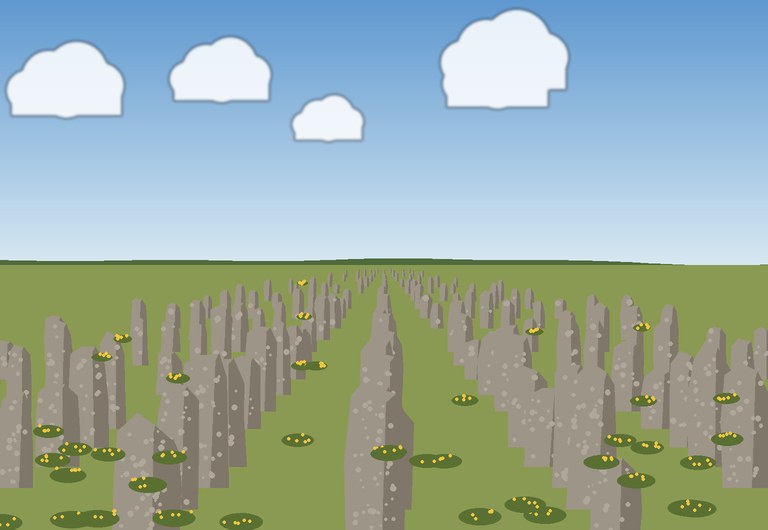

Drag across the picture to compare the two views.
Around the town of Carnac in southern Brittany, France, more than 3,000 standing stones march across the countryside in long rows. It is the largest collection of standing stones in the world, and some of them are among the oldest monuments in this guide.
The great alignments
The stones were raised in the Neolithic period, probably around 3300 BC, although some may be as old as 4500 BC. They are grouped in several alignments:
- Ménec: eleven converging rows about 1,165 metres long. The stones are up to 4 metres tall at the western end and shrink to about 60 centimetres along the rows.
- Kermario: about 1,029 stones in ten rows, around 1.3 kilometres long.
- Kerlescan: about 555 stones in thirteen lines, around 800 metres long.
Legends in stone
Nobody knows exactly why the rows were built. Ideas range from ceremonial routes to markers linked to the sky and the seasons. A local Christian legend says the stones are pagan soldiers who chased Pope Cornelius, until he turned them to stone.
In 2025 the megaliths of Carnac and of the shores of Morbihan were added to the UNESCO World Heritage List.
Visiting tips
- Start at the visitor centre near Ménec, then follow the paths and cycle routes between the alignments.
- From autumn to early spring, parts of the alignments are usually open for walking right among the stones.
- Stay for sunset, when the rows cast long shadows. Drag the picture above to see it.
Key facts
| Location | Carnac, Morbihan, Brittany, France |
| Built | c. 4500–3300 BC |
| Number of stones | More than 3,000 |
| Main alignments | Ménec, Kermario, Kerlescan |
| Longest rows | About 1.3 km (Kermario) |
| UNESCO World Heritage | Since 2025 |
Where it sits in time
Carnac Stones: c. 4500–3300 BC ·
Orange: this site. Grey: other sites. Lines: pyramids and early writing. Full timeline →