
Stonehenge
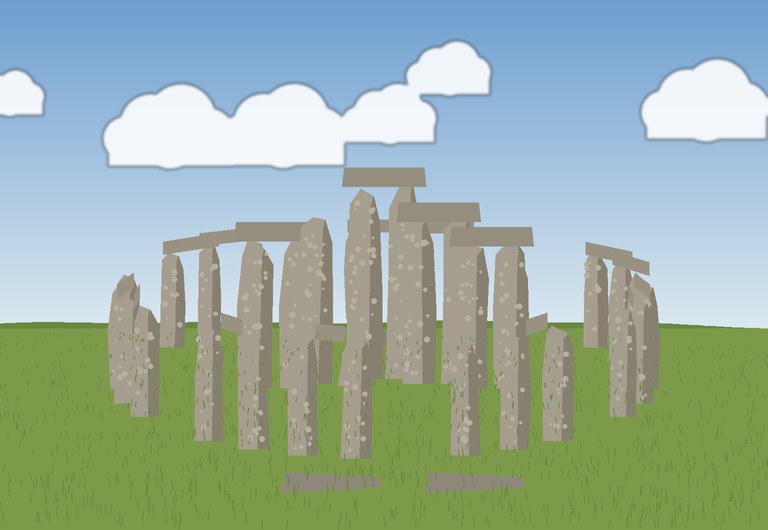
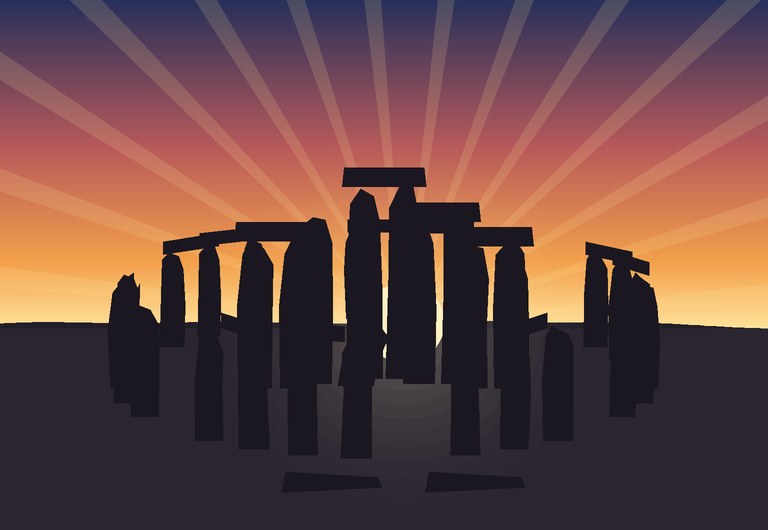
Drag across the picture to compare the two views.
Stonehenge, on Salisbury Plain in Wiltshire, is the most famous prehistoric monument in Europe. It was not built in one go. Work began around 3100 BC with a circular bank and ditch, and the great ring of sarsen stones that we recognise today was raised between about 2600 and 2400 BC. People kept changing and using the site for well over a thousand years.
Giants and bluestones
The outer circle once had 30 upright sarsens, each about 4 metres tall, joined at the top by a continuous ring of stone lintels. Inside stood five huge trilithons in a horseshoe, the tallest reaching about 7.3 metres. The lintels were fixed with woodworking joints, mortise-and-tenon and tongue-and-groove, carved in stone.
The smaller bluestones came from the Preseli Hills in Wales, about 240 kilometres away. How Neolithic people moved them so far is still one of the great puzzles of prehistory.
Built for the sun
Stonehenge is aligned with the sunrise on the summer solstice and the sunset on the winter solstice. At midsummer the sun rises close to the Heel Stone outside the circle, and thousands of people gather to watch it. Drag the picture above to see the stones at midsummer sunrise.
Visiting tips
- A visitor centre and a shuttle take you to the monument. Visitors normally walk on a path around the circle.
- Walk part of the way instead of taking the shuttle to see how the stones rise out of the landscape.
- At the solstices, access inside the circle is often opened. Check the official website well in advance.
Key facts
| Location | Salisbury Plain, Wiltshire, England |
| Built | c. 3100–1600 BC, sarsen circle c. 2600–2400 BC |
| Sarsen circle | About 30 m across, originally 30 uprights |
| Tallest trilithon | About 7.3 m |
| Bluestones from | Preseli Hills, Wales, about 240 km away |
| UNESCO World Heritage | Since 1986, with Avebury |
Where it sits in time
Stonehenge: c. 3100–1600 BC ·
Orange: this site. Grey: other sites. Lines: pyramids and early writing. Full timeline →